Introduction
Bali has over 500 tattoo studios. Some are exceptional. Some are dangerous. Most fall somewhere in the middle — competent but not memorable, cheap but not always safe, popular but not necessarily right for you.
If you Google “best tattoo studio Bali,” you’ll drown in marketing claims, paid reviews, and Instagram-perfect photos that tell you nothing about what actually matters.
This guide gives you something better: a framework. Twelve concrete criteria, an honest area-by-area breakdown of Bali’s tattoo scene, pricing benchmarks that reveal what “cheap” really costs, and the questions to ask during your consultation.
Written by professionals who’ve watched clients arrive at our studio after bad experiences elsewhere — and who genuinely want you to make the right choice, even if that studio isn’t ours.
Here’s what you’ll learn:
- The 12 criteria that separate great studios from average ones
- What to look for in an artist’s portfolio (and what to ignore)
- How Bali’s tattoo areas compare — Seminyak, Kuta, Ubud, Canggu
- What tattoo prices in Bali should actually be (and what “too cheap” hides)
- 15 questions to ask during consultation
- Red flags that mean walk away immediately
Let’s start with the framework.
The 12 Criteria for Choosing a Tattoo Studio in Bali
Print this. Bring it to consultations. Use it as your decision matrix.
Criterion 1: Sterilization Standards
Look for: Visible autoclave, single-use needles opened in front of you, biohazard sharps container in view, disposable barrier film on machines.
Ask: “Can I see your sterilization equipment? Do you have autoclave logs?”
Weight: CRITICAL — this is a walk-away issue if inadequate.
Criterion 2: Artist Experience & Specialization
Look for: Minimum 3-5 years of full-time tattooing, ideally with international experience or training. Specialization matters — a great blackwork artist may not be the right choice for realism.
Ask: “How long have you been tattooing? What styles do you specialize in? Can I see recent work in the style I want?”
Weight: HIGH — determines the actual quality of your tattoo.
Criterion 3: Portfolio Depth & Authenticity
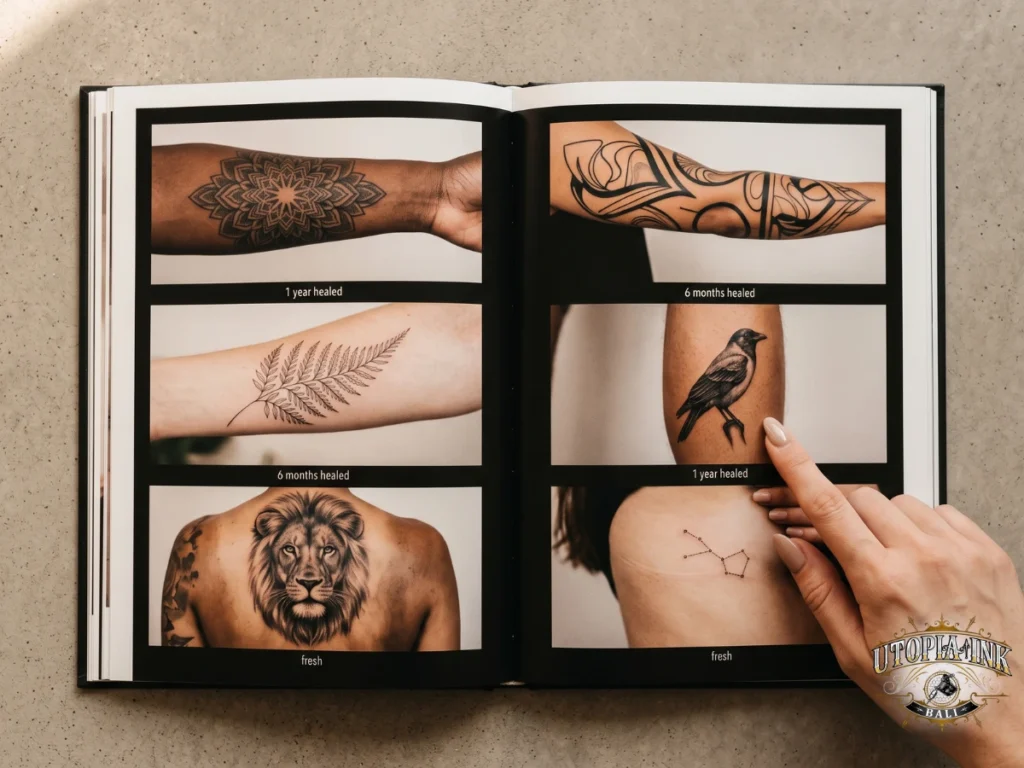
Look for: A portfolio (physical book or dedicated online gallery) showing healed work, not just fresh photos. Multiple examples in the style you want. Recent dates (not the same 20 photos from 3 years ago).
Ask: “Can I see 5-10 examples of healed work in [your style]? What was the healing timeline like for these?”
Weight: HIGH — reveals real capability.
Criterion 4: Consultation Process
Look for: A dedicated consultation appointment (free or nominally priced), design review, placement discussion, medical history intake, honest pricing conversation.
Red flag: Studios that offer walk-in tattooing with no consultation for anything but the smallest pieces.
Weight: HIGH — sets the tone for the whole experience.
Criterion 5: Studio Environment
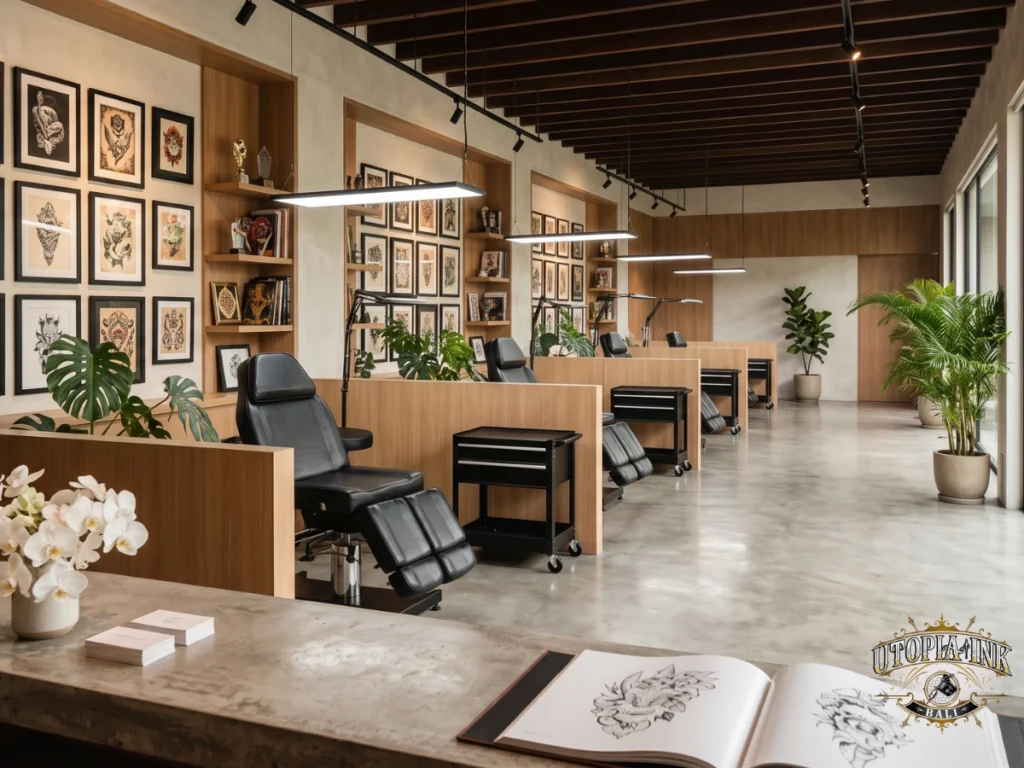
Look for: Clean floors, no visible dirt, dedicated workstations, proper ventilation, no wandering animals, no food storage near tattooing areas, separate area from reception.
Weight: CRITICAL — hygiene isn’t just about the equipment.
Criterion 6: Ink Brand Transparency
Look for: Studios that openly state which ink brands they use. Reputable brands: World Famous, Eternal, Dynamic, Fusion, Intenze, Solid Ink.
Ask: “What ink brand do you use? Do you have batch information available?”
Red flag: Vague answers or unbranded ink.
Weight: MEDIUM-HIGH — impacts longevity and allergy risk.
Criterion 7: Aftercare Support
Look for: Written (printed or digital) aftercare instructions specific to Bali’s climate. Willingness to answer questions during healing, even after you’ve left Bali.
Ask: “What aftercare do you provide? Can I contact you after I return home if I have questions?”
Weight: MEDIUM-HIGH — especially important for travelers.
Criterion 8: Business License & Reviews
Look for: Visible business license or health certificate. Genuine Google reviews (100+, healthy mix of ratings, detailed feedback). Independent reviews on TripAdvisor.
Red flag: Only 5-star Instagram-comment reviews, no Google presence, license nowhere to be seen.
Weight: MEDIUM — indirect signal but reveals legitimacy.
Criterion 9: Communication & Language
Look for: Fluent English (or your language), clear pricing, written quotes, responsive to your questions, no pressure tactics.
Red flag: Rushed answers, price haggling, discomfort with your questions.
Weight: HIGH — communication issues during consultation predict problems during execution.
Criterion 10: Pricing Transparency
Look for: Clear pricing structure (minimum, hourly, or by-size), written quote before you commit, no surprise fees, honest about time required.
Red flag: Extreme low prices, verbal-only quotes, pressure to book immediately.
Weight: MEDIUM — but see the pricing section below for what “reasonable” actually looks like.
Criterion 11: Location & Accessibility
Look for: Physical studio in a legitimate commercial area, not a residential compound or beachside shack. Reasonable proximity to your accommodation for aftercare check-ins.
Weight: LOW-MEDIUM — matters less than the other criteria, but affects convenience.
Criterion 12: Post-Tattoo Care Facilities
Look for: Studios that offer or refer touch-up services, healing check-ins (in person or via video), and connections to medical care if needed for complications.
Weight: LOW-MEDIUM — a differentiator, not a dealbreaker.
How to Read a Tattoo Portfolio (What Actually Matters)
Portfolios can be misleading. Here’s what to look for beyond pretty pictures.
Green flags:
- Consistent line quality across pieces — reveals technical control
- Healed photos alongside fresh photos — shows genuine work, not just Instagram-day results
- Multiple styles executed well — depth, not just one signature look
- Client diversity — different skin tones, body areas, ages
- Time-stamped or dated work — recent activity, not stale portfolio
- Complex pieces done in one artist’s hand — proves consistency
Red flags:
- Only close-up crops — hides poor line placement or shakes
- Only fresh tattoos, never healed — could mean poor healing outcomes
- Suspiciously identical photo angles/lighting — could be stolen from other artists
- Only one style repeated — okay if you want that style, but limits ability to advise on placement/design
- No portfolio at all — inexcusable
- Only offering to show designs, not tattoos on skin — designs on paper are irrelevant
Ask specifically: “Can I see a piece similar to what I want that has healed for 6+ months?” A confident, capable artist will show you exactly that.
Bali Tattoo Areas: Honest Comparison
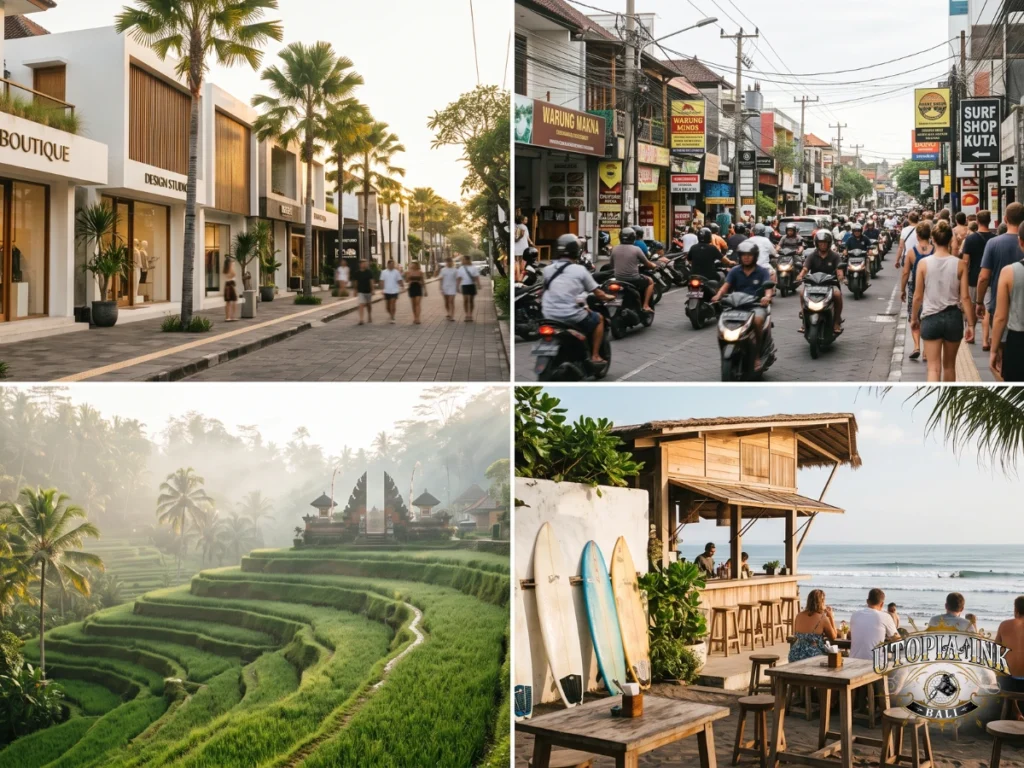
Where you get tattooed in Bali affects convenience, atmosphere, and (sometimes) quality. Here’s a straightforward look at the main tattoo destinations.
Seminyak
Character: Upscale, international, cosmopolitan. Beach clubs, boutique villas, high-end restaurants. Cater to Australian, European, and North American clientele.
Studio profile: Premium-positioned studios, often Western-founded or Australian-owned. Consultation-driven. Higher price point but higher standards.
Best for: Travelers wanting Western-standard experience, high-end custom work, professional consultation process.
Downsides: Higher prices. Can feel less “Bali authentic.”
Pricing baseline: IDR 1.5M-6M per session depending on size/complexity.
Sub-area note — Petitenget corridor: Within Seminyak, the Petitenget area (along Jl. Petitenget and Jl. Kayu Jati) has emerged as Bali’s most concentrated premium hospitality zone. This corridor houses many of Seminyak’s iconic destinations — Motel Mexicola, La Lucciola, Potato Head Beach Club, Desa Potato Head Bali — alongside 5-star hotels like Alila Seminyak, Hotel Indigo IHG, W Bali, Grand Mercure, and The Legian. Studios in this specific sub-area (Utopia Ink Bali sits on Jl. Kayu Jati, adjacent to Motel Mexicola) benefit from foot traffic of premium international clientele and offer maximum convenience for guests staying in the Seminyak beachside hotel zone. If you’re staying in a Seminyak 5-star hotel and want walking-distance convenience, prioritize studios in this specific corridor.
Kuta / Legian
Character: Backpacker and party central. Cheap accommodation, mass-market shopping, nightlife-focused.
Studio profile: Wide range. Some legitimate professional studios; also many tourist-trap shops targeting budget travelers, especially near the beach and along Poppies Lane / Legian Street.
Best for: Budget travelers who do rigorous research to find the good studios among the risky ones.
Downsides: Higher concentration of unsafe operations. Walk-in tattoo shops with minimal consultation. Language barrier at some locations.
Pricing baseline: IDR 500K-3M — wide range reflects wide quality range.
Warning: The bargain-price tattoo shops of Legian Beach are the highest-risk category in Bali.
Ubud
Character: Cultural, spiritual, yoga/wellness-focused. Quieter, more inland. Attracts long-stay travelers, digital nomads, spiritual tourists.
Studio profile: Smaller studio count. Often boutique operations. Some specialize in traditional Balinese or Polynesian styles. Slower pace.
Best for: Cultural or traditional tattoo interests, long-stay travelers, meditative experience.
Downsides: Fewer options overall. Less concentrated tattoo scene. Travel from beach areas takes 1-2 hours.
Pricing baseline: IDR 1M-4M.
Canggu
Character: Digital nomad, surf, trend-forward. Younger crowd. Instagram-heavy culture. Rapidly evolving.
Studio profile: Newer studios, often trendy in design, sometimes owned by expat artists. Mixed quality — some excellent, some more about aesthetics than depth.
Best for: Trend-focused designs, contemporary styles (fine line, blackwork, minimalist), Instagram-culture clients.
Downsides: Traffic congestion. Newer studios sometimes lack established reputation. Quality variance high.
Pricing baseline: IDR 1.2M-5M.
Bali Tattoo Pricing: What “Reasonable” Actually Looks Like
Understanding pricing helps you spot bargains too good to be true.
Realistic Price Ranges (2026)
Small tattoo (under 5cm):
- Rushed studios: IDR 300K-500K
- Standard studios: IDR 600K-1M
- Premium studios: IDR 1.2M-2M
Medium tattoo (5-15cm):
- Standard studios: IDR 1.5M-3M
- Premium studios: IDR 2.5M-4M
Large tattoo (over 15cm, or complex):
- Standard studios: IDR 3M-6M+
- Premium studios: IDR 5M-10M+
Full sleeve or back piece:
- Requires multiple sessions
- Total cost: IDR 12M-40M+ depending on complexity, artist, style
What “Too Cheap” Actually Hides
When you see a small tattoo for IDR 200K (about USD 13), the studio is cutting corners somewhere. The math doesn’t work otherwise:
- Single-use needles cost IDR 15K-30K per set
- Sterile ink cups, barriers, gloves: IDR 20K-40K per session
- Rent, electricity, artist wages, taxes
- Ink cost: IDR 50K-150K per session
If overhead costs exceed the price you’re paying, ask yourself which corner they’re cutting.
Most common corners cut at low-price shops:
- Reusing needles (extreme health risk)
- Cheap unbranded ink (allergy risk, fading)
- Rushed sessions (poor line quality)
- No consultation (bad placement decisions)
- No aftercare instructions (infection risk)
Bargain tattoos become expensive when you factor in medical treatment, cover-ups, and laser removal.
What “Expensive” Actually Buys
Premium pricing (IDR 3M+ for medium pieces) reflects:
- Higher artist experience and expertise
- Higher-grade inks (better longevity)
- Longer consultation and design process
- Cleaner facility with better equipment
- Post-tattoo touch-ups included (some studios)
- International-standard sterilization
- Insurance and licensing
You’re not paying for the tattoo itself — you’re paying for the confidence that the tattoo will heal well, look good in 10 years, and won’t leave you with regret.
15 Questions to Ask During Your Consultation
Ask these directly. Notice how confidently and specifically they answer.
Safety questions
- Can I watch you open the needle package?
- What sterilization equipment do you use?
- What ink brand do you use, and do you have batch info?
- What’s your protocol if a client has a reaction?
Artist experience questions
- How long have you been tattooing full-time?
- Where did you train?
- Can I see healed examples of the style I want?
- What styles are you most known for?
Design & execution questions
- Can you walk me through your design process?
- How long will this session take, realistically?
- Do you recommend this placement for my design and skin type?
- What size and detail level do you recommend?
Aftercare & follow-up questions
- What aftercare do you provide? Written or verbal?
- Can I reach you if I have healing concerns after I leave Bali?
- Do you offer touch-ups, and what’s your policy?
The answers you get will tell you everything about the studio’s professionalism, care standards, and fit with your project.

8 Red Flags — Walk Away Immediately
- Refusal to open needle packages in front of you
- No portfolio available, or only Instagram screenshots
- Prices dramatically below IDR 500K for small pieces
- No consultation offered, even for large designs
- Studio smells of dirt, cigarettes, or damp
- Artist is drinking, visibly tired, or distracted
- Pressure to book immediately or pay upfront in cash
- No aftercare instructions or dismissive of your questions
Any single red flag from this list means the studio isn’t right — regardless of how enthusiastic other reviews might be.
Frequently Asked Questions
How much time should I plan for choosing a studio?
Ideally, 2-4 weeks before travel to research online (portfolios, reviews, communication with studios). On arrival: 1-2 consultation visits before booking your session. Rushed decisions produce rushed results.
Is it better to book in advance or walk in?
Advance booking is almost always better, especially at reputable studios. It gives you time for proper consultation and lets you choose your specific artist. Walk-ins are more suitable for small, simple pieces at studios you’ve already vetted.
What if I don’t like the design during consultation?
A good studio welcomes feedback and offers revisions. You should not feel pressured to accept a design you’re not sure about. If revisions aren’t offered graciously, that studio isn’t right for you.
Should I choose the studio or the specific artist first?
Both matter, but for custom work, the artist matters more than the studio brand. Some studios have multiple artists with different specializations. Ask which artist would be best suited for your design and style.
Is a Google review count of 500+ better than 50+?
Not necessarily. Look at review recency, response from studio to negative reviews, mix of ratings (100% five-star can be suspicious), and detailed content. 100 detailed recent reviews are more informative than 500 generic old ones.
How do I verify Australian ownership claims?
Ask directly. Ask which state the owner is from, whether they’re on-site or remote, and how the studio applies Australian standards specifically. Legitimate Australian-owned studios answer these questions immediately.
What if the studio I chose has one artist I love but the rest look weaker?
Book the specific artist you love, and make sure your session is with them. Confirm this at consultation, at booking, and on the day. Studio brand matters less than the individual artist doing your work.
Can I switch artists mid-project?
Ideally, no — an artist finishing a piece maintains style consistency. But if you’re mid-project and things aren’t working, communicate early. A reputable studio will accommodate or refund partial fees.
Are Instagram-famous artists always better?
Not necessarily. Large followings can reflect marketing skill rather than tattoo skill. Judge the actual tattoo work in their portfolio, not their engagement rate.
What about hygiene certifications posted online?
Real hygiene certifications are issued by recognized authorities and are verifiable. If a studio displays a certificate, ask which body issued it. Fake or invented “certifications” are a red flag.
How do I compare two studios I like?
Score each studio against the 12 criteria in this guide. Weight the ones most important to you (safety and artist experience should always be top). The higher-scoring studio wins.
What’s the biggest mistake first-time Bali tattoo tourists make?
Choosing a studio based on price or convenience rather than quality. The second biggest is not leaving healing time before beach/pool activities.
Making Your Decision
Choosing a tattoo studio in Bali isn’t just about finding a good artist. It’s about finding a studio that:
- Prioritizes your health above their revenue
- Communicates honestly (including admitting when your project isn’t their strength)
- Takes design and consultation seriously
- Stands behind their work through healing and beyond
The best signal is often intangible: how the studio makes you feel during your first interaction. Do you feel heard? Respected? Educated? Or rushed, dismissed, and pressured?
Trust that first impression. It usually predicts the rest of the experience accurately.
Whether you choose our studio or another, we hope this guide helps you find the right fit. Bali has some of the finest tattoo artists in Southeast Asia — and choosing well means you’ll leave with a piece of art you’ll love for decades.
At Utopia Ink, we’d be happy to be one of the studios you consider. Book a free consultation — no pressure, no obligation. Even if we’re not the right studio for your project, we’ll point you toward someone who is.