Introduction
You’re planning your Bali holiday. Somewhere between the villa bookings and beach club reservations, an idea starts forming: what if I got a tattoo? A permanent memory of the trip, etched into your skin — poetic, exciting, and just a little terrifying.
Then the doubts creep in. Is it safe? What about hepatitis? What if the studio isn’t clean? What happens if something goes wrong so far from home?
These are the exact questions we hear every week at our Seminyak studio, especially from Australian and European travelers who want the experience but not the risk. So let’s answer them all — honestly, thoroughly, and with the perspective of professionals who’ve been operating in Bali under Australian hygiene standards for years.
Here’s what you’ll learn in this guide:
- Whether getting a tattoo in Bali is actually safe (short answer: yes, at the right studio)
- The specific health risks that exist, and how they’re prevented
- A 10-point checklist to identify a safe studio in minutes
- Red flags that should make you walk away immediately
- Country-of-origin considerations for travelers (insurance, healing during travel)
- Everything Australian, American, and European visitors typically ask
Let’s begin with the honest truth.
Is It Safe to Get a Tattoo in Bali? The Honest Answer
Yes — if you choose the right studio. The same is true in Sydney, Los Angeles, or London.
Tattoo safety has nothing to do with geography and everything to do with three factors:
- Sterilization protocols — Are all needles single-use? Are reusable tools autoclaved?
- Artist hygiene practices — Gloves, hand washing, clean workstations
- Studio environment — Cleanliness, ventilation, dedicated stations per client
A world-class tattoo studio in Bali is safer than a sketchy shop in any Western city. Conversely, a bargain-basement tattoo shack on Legian Beach carries real risks that no reputable Bali studio would ever accept.
The problem isn’t Bali. The problem is that Bali offers extremes — from studios that follow Australian medical-grade hygiene protocols, to unlicensed street-side operations targeting tipsy tourists at 2am.
Your job as a traveler is knowing how to tell them apart. That’s what this guide is for.
The Real Health Risks (And How Professional Studios Prevent Them)
Let’s talk about what could actually go wrong, so you can evaluate any studio’s safety measures with clear eyes.
Bloodborne Pathogen Transmission
The most serious risk in any tattoo procedure — anywhere in the world — is transmission of bloodborne pathogens through contaminated needles or equipment.
The diseases that concern us:
- Hepatitis B — Extremely infectious; can survive on surfaces for days
- Hepatitis C — Primary bloodborne transmission risk in tattooing
- HIV — Lower transmission risk than Hep B/C, but obviously serious
How professional studios prevent this: (bold intro to list, not a heading)
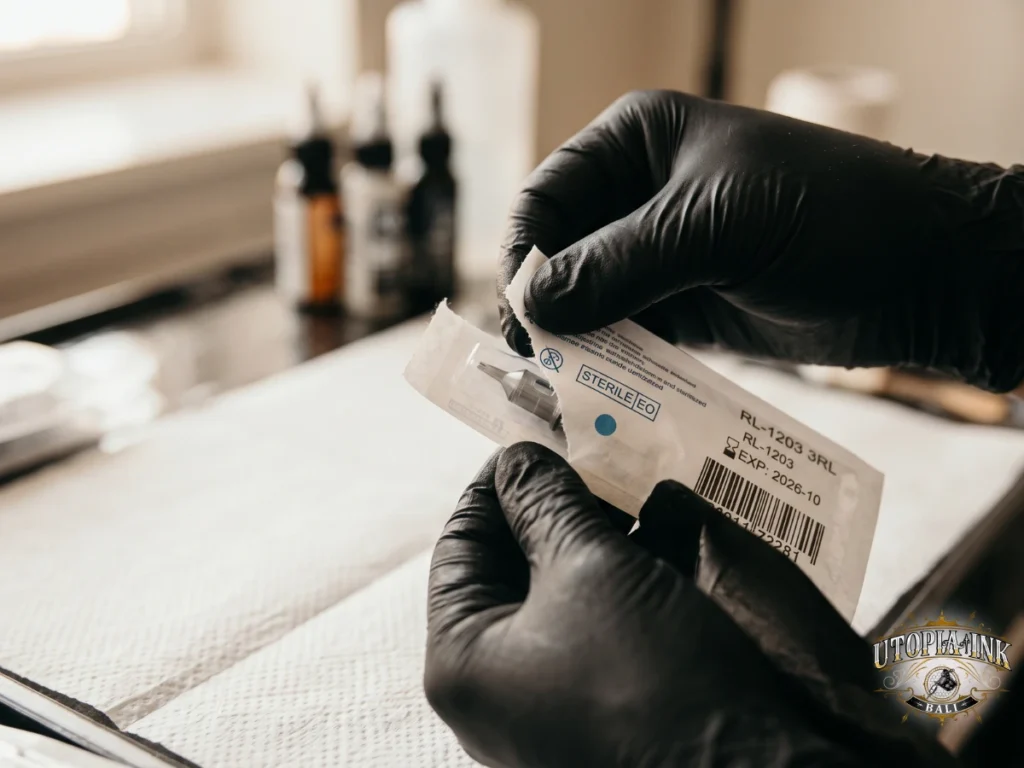
- 100% single-use needles — Every needle and needle cartridge is factory-sterilized, sealed, and disposed of after one client
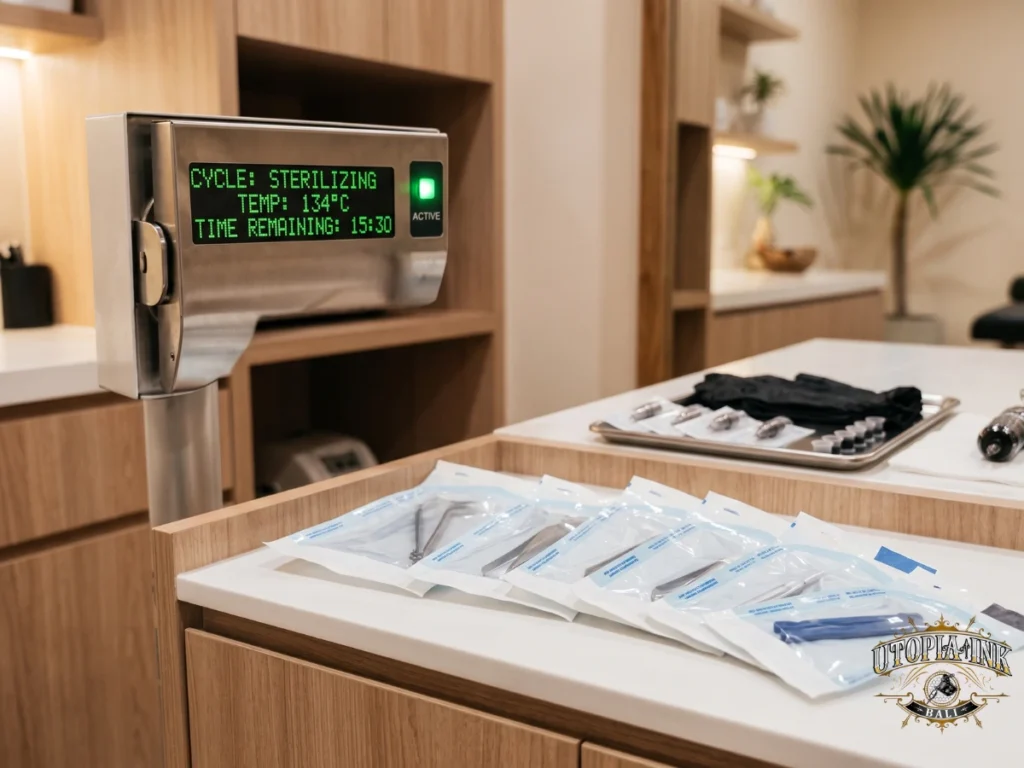
- Autoclave sterilization — Any reusable tools (tubes, grips) are steam-sterilized under high pressure at 121°C, reaching medical-grade sterility
- Sharps disposal — Used needles go directly into biohazard sharps containers, never into general waste
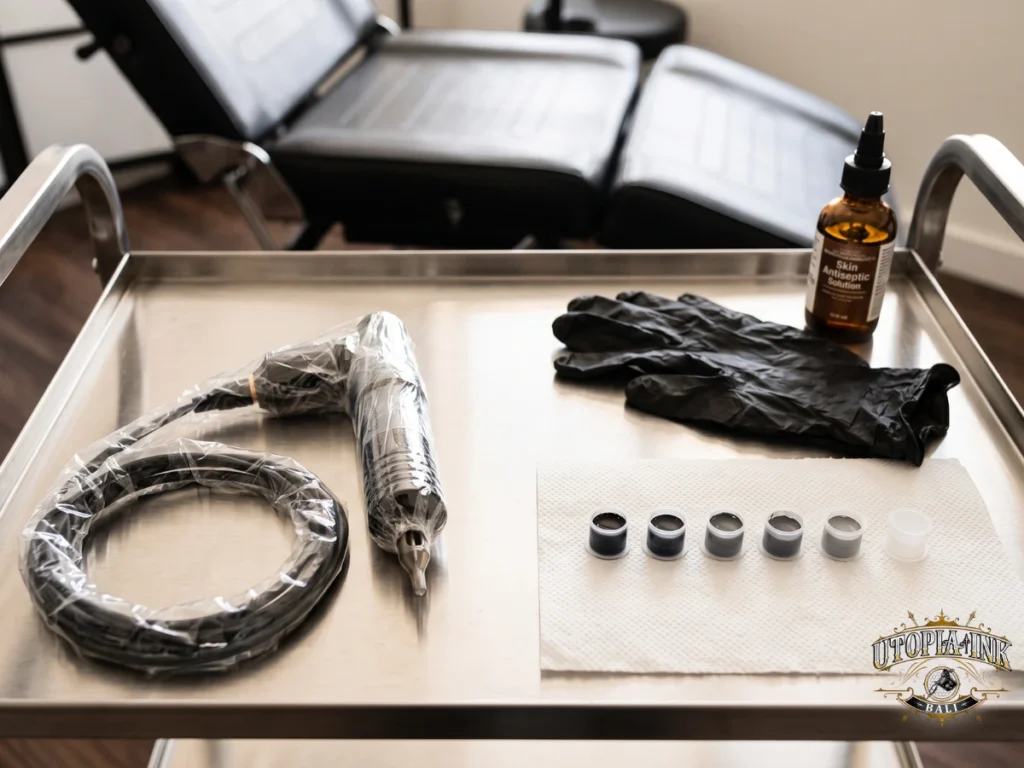
- Barrier film — Machines, cables, and surfaces are wrapped in disposable plastic barriers, changed between clients
At our studio, you can watch the needle package being opened in front of you. If a Bali studio can’t or won’t do this — walk out.
Bacterial Skin Infections
Skin infections are the more common risk, usually caused by:
- Contaminated ink (rare with reputable ink brands)
- Non-sterile skin preparation
- Poor aftercare during healing
- Bali-specific: tropical bacteria, humidity, saltwater exposure during healing
How professional studios prevent this:
- Skin antiseptic (isopropyl alcohol, chlorhexidine) applied before tattooing
- Sterile disposable ink caps — never dip needle back into a shared ink pot
- Premium ink brands (World Famous, Eternal, Dynamic) with batch traceability
- Clean towels changed per client — no shared surfaces on the healing area
- Written aftercare protocol — tropical-climate specific instructions
The infection risk is highest in the first 2-3 weeks of healing, especially in Bali’s humidity. A studio that gives you a generic 3-line aftercare card isn’t setting you up for success.
Allergic Reactions
Some ink pigments can trigger allergic reactions, particularly red and yellow. Modern professional-grade inks minimize this risk significantly.
How professional studios prevent this:
- Vegan-friendly, hypoallergenic inks from vetted manufacturers
- Patch testing available on request (especially for red inks)
- Full disclosure of ink brands used — you should be able to ask
- Medical history review before the session — allergies, skin conditions, medications
If a studio can’t tell you what brand of ink they use, that’s a red flag.
Poor Healing & Scarring
Even without infection, a badly executed tattoo can heal poorly — leaving raised scars, blowouts (ink spreading under skin), or patchy color.
Prevention:
- Skilled artist working at correct needle depth
- Appropriate tattoo location for your skin condition
- Realistic session length — not rushing large pieces
- Proper aftercare compliance on your end
This is why choosing an experienced artist matters as much as choosing a clean studio.
The 10-Point Safe Studio Checklist
Use this checklist during your consultation. If a studio misses more than one of these, keep looking.
1. Visible sterilization equipment
You should be able to see the autoclave. Ask to see it working. Serious studios are proud of their sterilization setup.
2. Single-use needle packages opened in front of you
The needle should come from a sealed sterile package that’s opened right before your session begins. If the artist can’t or won’t demonstrate this, walk away.
3. Disposable barrier film on all equipment
Machine, cables, ink caps, work surfaces — all should be wrapped in fresh plastic barriers for your session.
4. Fresh gloves per client (and per glove change)
The artist should put on fresh gloves in front of you. They should change gloves if they touch anything non-sterile mid-session (their phone, a doorknob, their hair).
5. Clean, sterile-feeling environment
The workstation should look and smell clean. Not “kind of clean.” Actually clean — like a dental office.
6. Written portfolio you can review
Ask to see a physical or digital portfolio of actual client work. Instagram alone isn’t enough — anyone can steal images. Genuine studios have their own body of work you can trust.
7. Consultation process (not walk-and-tattoo)
Reputable studios insist on a consultation before tattooing — especially for larger pieces. If a studio is happy to tattoo you immediately without discussing your design, placement, or medical history, that’s rushed and risky.
8. Written aftercare instructions
You should receive detailed, printed or digital aftercare instructions specific to Bali’s climate. Verbal-only or generic instructions signal cutting corners.
9. Business license visible
Legitimate studios in Bali register their business. A license or health certificate should be visible in the reception area.
10. Willingness to answer questions honestly
The right studio welcomes questions about ink brands, sterilization, artist experience, and aftercare. If your questions annoy them, that’s a red flag about their care standards more broadly.
7 Red Flags — When to Walk Away
If you see any of these, stop the consultation and leave:
- Reused needles or dipping needles back into shared ink
- No autoclave visible on premises
- Prices dramatically cheaper than industry norm (usually IDR 200K-500K for suspicious “cheap tattoo” offers)
- Artist working without gloves, or same gloves between clients
- Studio in unhygienic environment (visible dirt, animals wandering, food storage nearby)
- Refusal to discuss aftercare or sterilization
- Pressure to tattoo immediately without consultation or medical questions
The tourist strips of Legian and parts of Kuta contain shops that fail multiple items on this list. Just because a studio has a shopfront and Instagram presence doesn’t mean it’s safe.
What “Australian Hygiene Standards” Actually Means
You’ll see “Australian standards” advertised on tattoo studios throughout Bali. Some are genuine, some are marketing.
Australian tattoo studios operate under state-level health regulations (varying slightly by state) that mandate:
- Bloodborne pathogen training for all artists
- Autoclave sterilization for reusable tools
- Single-use, factory-sterilized needles
- Sharps disposal via licensed biohazard contractors
- Regular inspections by local health authorities
- Documented sterilization logs
- Skin preparation with medical-grade antiseptics
A genuinely Australian-standard studio in Bali will follow all these protocols even without local enforcement mandating them. That’s the whole point of the standard: doing it right regardless of what local law technically requires.
When evaluating a studio’s claim to Australian standards, ask:
- Do you maintain autoclave sterilization logs?
- What sharps disposal service do you use?
- Are your artists trained in bloodborne pathogen safety?
Answers should be immediate and specific, not vague.
Special Considerations for Travelers
Getting a tattoo abroad adds complications you wouldn’t face at home. Here’s what to plan for.
Travel Insurance & Tattoo Coverage
Most standard travel insurance policies do NOT cover complications from tattoos. This includes infections, allergic reactions, or emergency medical treatment related to a tattoo you got during your trip.
Check your policy carefully. Some specialty insurers offer add-on coverage for tattoo-related emergencies. If you’re getting a significant piece, this is worth investigating before you travel.
Healing Timeline vs Travel Timeline
A tattoo takes 2-4 weeks to complete surface healing, and up to 6 months for full skin regeneration. Your Bali holiday probably lasts 1-3 weeks.
Practical implications:
- Book your tattoo early in the trip — gives maximum healing time in the studio’s care
- Plan aftercare-friendly activities for the days after — no beach, pool, or intense sun exposure
- Bring aftercare supplies home — you’ll continue healing after you leave Bali
- Know when to seek medical care — if you develop signs of infection during travel or shortly after, don’t wait
Cultural Sensitivity
Certain designs carry cultural and spiritual significance in Bali. Balinese religious symbols, deity imagery, and traditional sacred motifs deserve respect and should be discussed thoughtfully.
A quality studio will guide you on cultural appropriateness. This isn’t overly restrictive — it’s about ensuring you leave with a tattoo you’ll feel good about, not one that inadvertently disrespects the culture that inspired it.
Post-Trip Follow-up
Ideally, your studio should be contactable after you return home for aftercare questions, healing concerns, or (worst case) infection guidance. Studios that treat you as a one-transaction tourist may not respond after your holiday ends.
Ask during consultation: “Can I reach you if I have healing concerns after I leave Bali?” The answer tells you everything about the studio’s client relationship approach.
At Utopia Ink Bali, we’re available via WhatsApp for aftercare questions during business hours — including after you’ve returned home from your holiday. This is what a professional studio should offer.
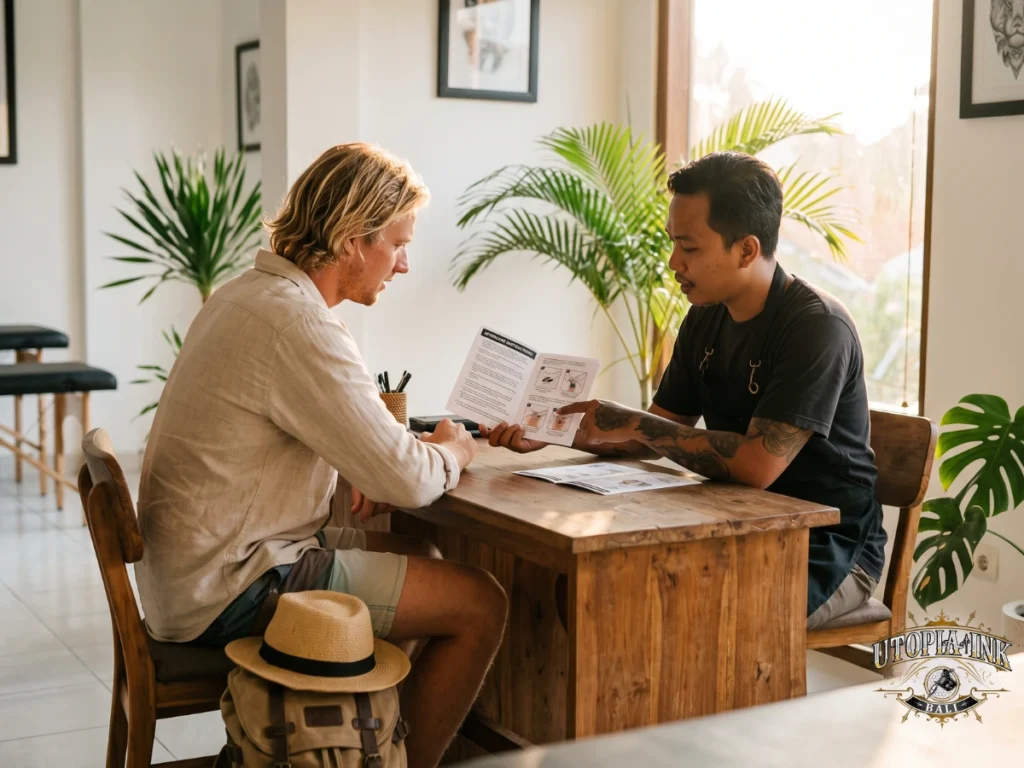
Studio Location and Convenience
Where a Bali tattoo studio is located matters more than most travelers realize. Convenience affects your ability to:
- Attend consultation without significant travel time from your accommodation
- Return for aftercare check-ins during your trip if concerns arise
- Manage healing while continuing to enjoy your holiday
- Access the studio easily on days when you’re planning other Seminyak activities
Studios in Bali’s premium hospitality corridors — particularly Seminyak’s Petitenget area — tend to be more accessible for travelers staying at nearby hotels and resorts. Studios in remote areas or tucked into hard-to-find residential streets create logistical friction that becomes stressful mid-trip.
Utopia Ink Bali is located on Jl. Kayu Jati in Seminyak, immediately next to Motel Mexicola. We’re within walking distance of major hotels including Alila Seminyak, Hotel Indigo Bali Seminyak Beach, Desa Potato Head Bali, The Legian, W Bali Seminyak, and Grand Mercure Bali Seminyak. Petitenget Beach is a 5-minute walk. For travelers staying anywhere in the Seminyak beachside hotel zone, we’re conveniently accessible on foot for both your session and any follow-up needs.
Frequently Asked Questions
Is Bali tap water safe during tattoo healing?
No — Bali tap water is not potable, and it’s not ideal for cleaning a healing tattoo either. Use bottled water for cleaning during your Bali stay. Once you’re home, filtered tap water is fine.
Should I get vaccinated before getting a tattoo in Bali?
If you’re not already vaccinated against Hepatitis B, consider getting the vaccine series before travel (requires multiple doses over several months). This offers baseline protection, though it doesn’t replace the need to choose a safe studio.
What’s the risk of getting Hepatitis or HIV from a Bali tattoo?
At a professional studio following sterilization protocols, the risk is effectively zero — the same as any Western country. At an unlicensed street studio reusing needles, the risk is real. Your choice of studio determines your risk.
Can I swim at the beach or pool after a fresh tattoo?
No, not for at least 2-3 weeks. Salt water, chlorine, and beach sand all introduce infection risk during the healing window. This is one of the biggest healing mistakes we see with tourists — a fresh tattoo and a beach holiday are incompatible for the first two weeks.
How much should a safe tattoo in Bali cost?
Quality tattoos in Bali generally start from IDR 1,000,000 (~USD 65) for small designs and scale up based on size, complexity, and artist experience. If a studio quotes dramatically lower prices, they’re cutting corners somewhere — usually in equipment, ink quality, or artist expertise.
What if I develop an infection after I leave Bali?
Seek medical care immediately. Signs of infection include increasing redness spreading outward, warmth, pus discharge, fever, or swelling that worsens after day 4. Don’t try to manage a suspected infection on your own — see a doctor. Keep your studio’s contact information handy for reference.
Is Seminyak safer than Kuta for tattoos?
Neighborhood alone doesn’t determine safety — individual studios do. That said, Seminyak tends to have more established, premium-positioned studios catering to international clients, while some (not all) tourist-strip areas in Kuta and Legian have shops with lower standards. Judge each studio on its own merits using the checklist above.
Can I get a large tattoo (sleeve, back piece) done in one trip?
Large pieces typically require multiple sessions spanning weeks or months. Getting a full sleeve in one 3-hour session isn’t just impractical — it’s poor practice that risks skin trauma and healing complications. If you want a large piece, plan multiple visits, or start on a piece and continue when you return.
What ink brands should a safe studio use?
Reputable international ink brands include World Famous, Eternal, Dynamic, Fusion, and Intenze. These have batch traceability, ingredient transparency, and consistent quality. A studio using unbranded or unknown ink is a warning sign.
Do I need to bring anything to my tattoo appointment?
– Government-issued photo ID (you should be at least 18)
– A snack and water — sessions can be long
– Your reference images if you have them
– Comfortable clothing that gives access to the tattoo area
– Cash or card for payment (confirm accepted methods during booking)
Is it safe to get a tattoo the same day I arrive in Bali?
Not ideal. Give yourself at least a day to rest, hydrate, and acclimate. Dehydration from the flight can affect skin condition and pain tolerance.
What if I want to cover an old tattoo I already have?
Cover-ups require experienced artists and careful design planning. Choose a studio with a strong cover-up portfolio, and expect the design conversation to take longer than a fresh tattoo.
Making the Decision
Here’s the bottom line: getting a tattoo in Bali can be one of the most memorable, well-executed pieces of body art you’ll ever own — if you take the time to choose the right studio.
The studios that get this right — following medical-grade sterilization, using premium inks, providing thorough consultations and aftercare — offer a tattoo experience that rivals or exceeds what you’d get in your home country. They tend to be Australian-owned or Western-founded, staffed by internationally-trained artists, and located in premium areas like Seminyak.
The studios that don’t get it right are also plentiful. They rely on tourist naivety and cheap prices to attract clients who won’t be around for the healing consequences.
Your safeguards:
- Use the 10-point checklist during your consultation
- Watch for red flags — walk away if you see them
- Verify sterilization claims specifically (ask questions)
- Read reviews from clients who returned to their home country and posted feedback weeks later, not just fresh-tattoo photos
- Trust your gut — if something feels off during consultation, it probably is
At Utopia Ink, we’ve built our reputation on being the kind of studio you can safely bring your holiday tattoo dream to — with the sterilization protocols of a Sydney studio, the artistic depth Bali travelers deserve, and the aftercare guidance to see you through healing whether you’re still on the island or back home.
If you’d like to visit for a consultation, our team is available for free consultations. We’re happy to answer any specific safety questions before you book — and if we’re not the right studio for you, we’ll tell you honestly.
Whatever you decide, choose safely. Your future self will thank you for the tattoo you love — not the one you had to remove.